Our Research & Projects

Rigorous academic research translated into production-ready solutions. Our studies drive the optimizations we deliver to clients.

Graph Query Performance Analysis

A comprehensive comparison of variable-length path query execution across modern database systems.

Database Performance Comparison Chart

Evaluating Regular Path Query Performance: Graph DB vs RDBMS

2026 Database Systems 14 Pages

This study presents a rigorous comparison of Regular Path Query (RPQ) execution performance across five modern database systems: MySQL 8.0, MySQL 5.7, MariaDB 10.3, MongoDB 6.0, and Neo4j 5.x.

Using the YAGO2s knowledge graph dataset containing over 1 million triples, we evaluated query performance across 9 levels of path complexity, from simple 1-hop queries to complex 9-hop traversals.

41.5x

Speedup Factor

Neo4j demonstrated up to 41.5x performance improvement over modern SQL databases for complex path queries.

1M+

Knowledge Graph Triples

Testing conducted on YAGO2s dataset with over 1 million real-world entity relationships.

5

Database Systems

Comprehensive benchmarks across MySQL 8.0, MySQL 5.7, MariaDB 10.3, MongoDB 6.0, and Neo4j 5.x.

Research Methodology

Our benchmarking methodology ensures reproducible and fair comparisons across database systems:

  • Containerized Environment: Docker-based testing ensures consistent execution conditions across all database systems.
  • Dynamic Data Generation: Custom data generators produce consistent test datasets with controlled complexity levels.
  • Query Complexity Scaling: Nine levels of path queries (1-hop to 9-hop) test performance across varying traversal depths.
  • Correction Constants: Statistical analysis accounts for system-specific overhead to ensure fair comparisons.
  • Reproducibility: All test configurations and data generation scripts documented for verification.

Key Conclusions

  1. Architecture Matters: Native graph database architecture provides significant advantages for path-oriented queries that cannot be replicated through query optimization alone in relational systems.
  2. Scaling Behavior: Performance gaps widen dramatically as query complexity increases, with relational systems showing exponential degradation beyond 5-hop queries.
  3. Practical Impact: For workloads involving significant graph traversal, migrating to a native graph database can yield order-of-magnitude improvements.
  4. Hybrid Approach: Many production systems benefit from using graph databases for relationship-heavy queries while maintaining relational systems for transactional workloads.

Client Projects

Research translated into production software for healthcare, academic, and industrial partners.
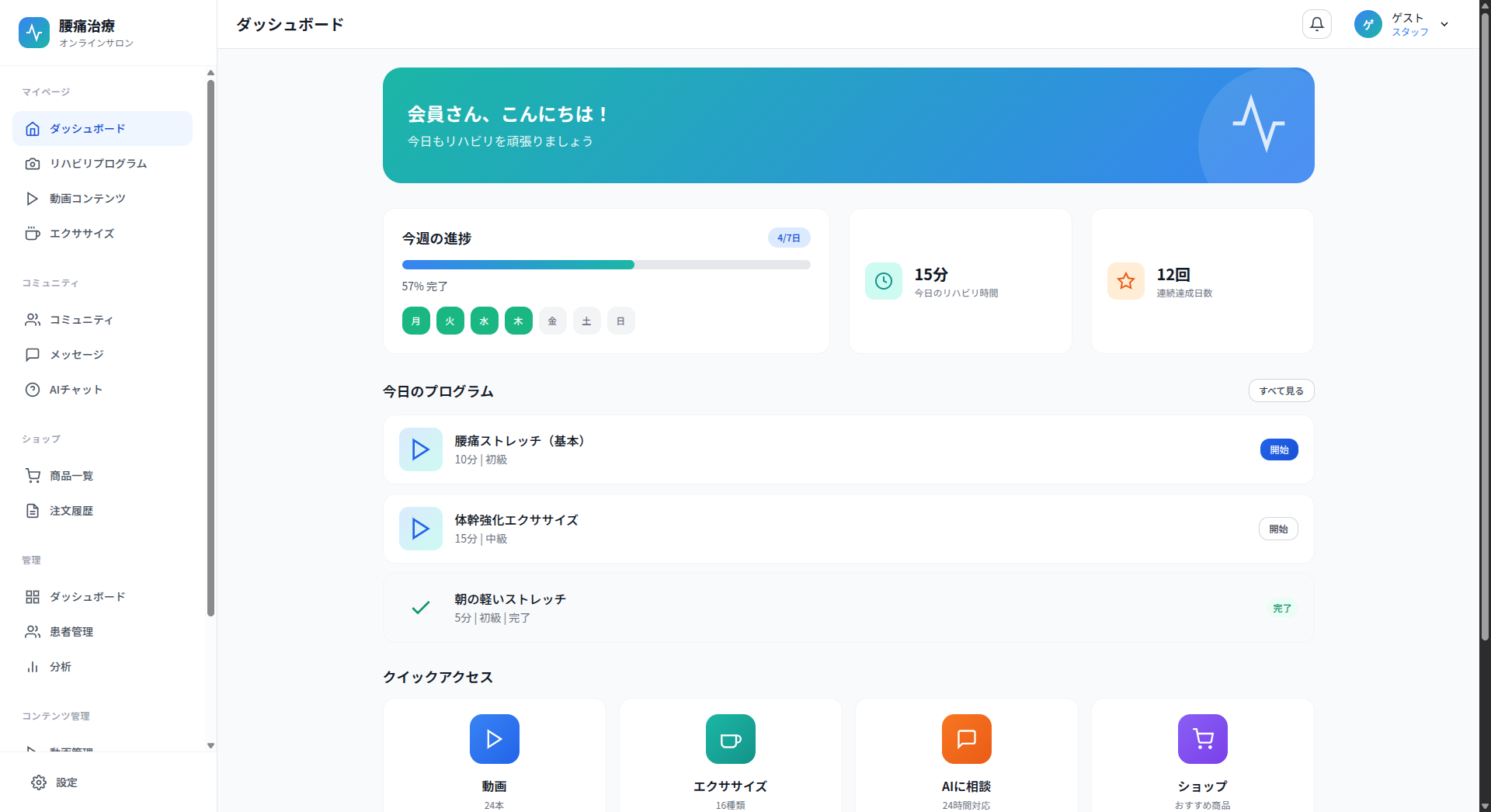
Healthcare AI Platform Interface

Healthcare AI Platform for Patient Aftercare

2026 Healthcare Technology Medical Institution

Development of a comprehensive online platform for a medical institution specializing in rehabilitation therapy. The system reduces physician and therapist burden while improving patient outcomes through AI-driven aftercare.

Key Capabilities:

  • AI Rehabilitation Scheduling: Machine learning-powered automatic rehabilitation schedule creation based on patient characteristics and treatment history
  • Treatment Effect Analysis: ML models with SHAP value analysis to quantify treatment effectiveness and predict patient outcomes
  • Secure AI Chatbot: On-premise LLM deployment for patient guidance without exposing sensitive medical data to external services
  • Integrated Communication: Secure messaging between patients and medical staff with scheduled automated check-ins
  • Role-Based Access Control: Three-tier user system (patients, staff, administrators) with granular data access permissions
Healthcare AI Machine Learning On-Premise LLM Patient Data Security SHAP Analysis
Crystal Image Analysis Software

Crystal Image Analysis Software

2026 Scientific Software Osaka University

Development of specialized image analysis software for Professor Maruyama Mihoko's research group at Osaka University Graduate School of Engineering.

The software enables automated analysis of calcium oxalate crystal microscope images, classifying crystal phases (COM and COD) and measuring size distributions to support materials science research.

Key Features:

  • Automated crystal phase classification using machine learning
  • Size distribution analysis and statistical reporting
  • Batch processing for large image datasets
  • Integration with laboratory microscope systems
Image Analysis Machine Learning Materials Science Osaka University
Database Benchmarking System

Containerized Database Benchmarking System

2026 DevOps & Testing

A comprehensive Docker-based benchmarking infrastructure for reproducible database performance testing. The system enables fair comparisons across diverse database architectures.

System Components:

  • Docker Compose orchestration for multi-database environments
  • Automated data generation with configurable complexity
  • Query execution timing with statistical analysis
  • Results aggregation and visualization tools
  • Configuration management for reproducible tests
Docker Benchmarking Database Testing DevOps

Research Directions

Graph Database Systems

Continuing research into graph query optimization, traversal algorithms, and hybrid database architectures for complex relationship-heavy workloads.

Healthcare AI

Research into secure AI deployment for medical institutions, patient outcome prediction, and treatment optimization using machine learning.

Scientific Computing

Applied research in image analysis, automated classification systems, and specialized software tools for academic research applications.

Interested in Research Collaboration?

We partner with academic institutions, medical facilities, and research labs on cutting-edge projects.

Get in Touch